
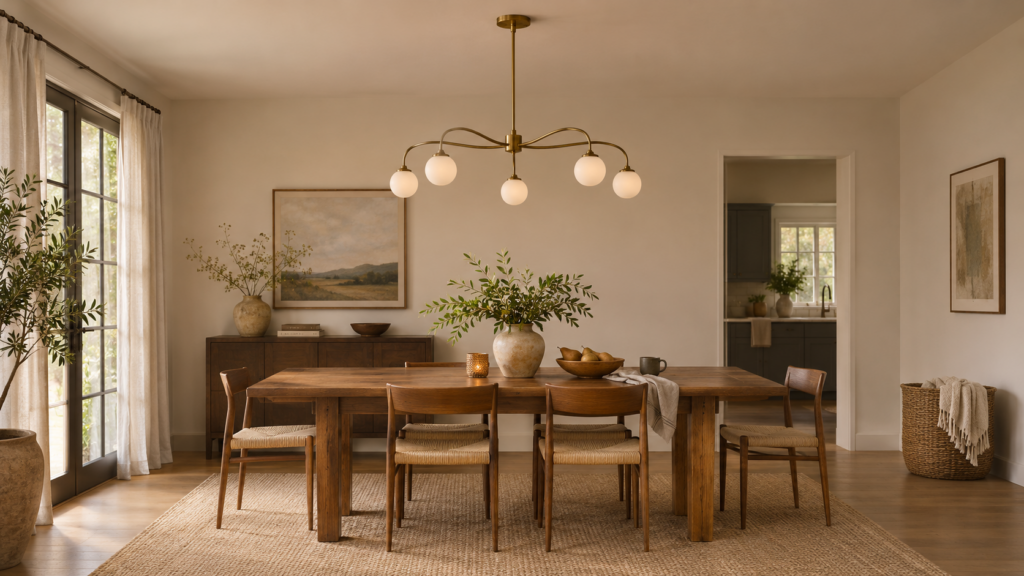
You know that feeling when a chandelier looks gorgeous in pictures, but doesn’t suit your home?
More often than not, it comes down to the material, finish or light diffusion of the fixture. Too glossy, a clear lampshade you can see the bulb through, or a lampshade you don’t want above a dining/kitchen table…
Let’s take a closer look at what to consider when selecting chandeliers, starting with colour/materials, and then finish.
What You’ll Learn
- Focus on the material, rather than the sheen, of the frame
- Frame materials and common metals
- Different types of glass, crystal, natural stone and other materials
- Common finishes to consider, and how to combine metals
- Important factors to review prior to purchase
- Summary
Table of Contents
ToggleFocus on the material, rather than the sheen, of the frame
The material will largely form the frame of your chandelier, but has an influence on its size, silhouette, ease of maintenance, and look & feel too.
For example, a thinner, more streamlined steel frame will give a lighter, more defined profile to the chandelier, whilst a thicker, brass-hued frame will have more visual impact. When you introduce non-transparent shades, the material may appear to blend with these, or soften the frame’s presence.
Many chandeliers incorporate more than one material, so it’s worth considering which combination(s) would work well in your space. According to the 2026 U.S. Houzz Kitchen Trends Report, 52% of surveyed renovators adding or upgrading kitchen lighting during 2025-26 chose metal-and-glass fixtures (this is inclusive of all kitchen lighting, not solely chandeliers).
From here, think about what you want your chandelier to achieve, i.e., statement focal point, relaxed ambience, understated detail, etc. and what will facilitate that outcome.
Frame materials and common metals
Metal frames can be slim, broad, linear or ornate. Check the base metal and surface treatment because both affect appearance, durability and upkeep.
Common materials used in the frame include:
- Steel/iron: Suited to sleek, linear, modern, industrial, etc. styles, and typically available in darker, more neutral tones, including black, pewter, nickel, etc. Generally, it will require a protective coating, and may be more sensitive to moisture, depending on this treatment/coating. So, if you spot a black chandelier you love, investigate how it achieves that look, and any specific aftercare required, as it can differ, e.g., powder-coated, spray-painted, etc.
- Brass: Typically gives a warmer, more traditional, classic, transitional look, but again, may be true solid brass, plated, or simply coloured to resemble it, with various levels of durability, price, ageing, etc. resulting.
- Aluminium: Can suit larger, open-frame chandeliers because aluminium is relatively light, though note the combined weight of the chandelier, including any glass, crystals, etc, will need to be considered, along with appropriate ceiling fixing, etc.
Browse across a range of chandeliers, such as those found in the Lightopia chandeliers section, and note the materials, sizes, dimensions, and specifications, etc, to inform your choice, and help you determine what might be appropriate for your space.
Take note of the materials, but importantly, also consider how the metals have been finished/treated, as they can significantly alter the overall look, feel, ageing, etc, of the fixture, as discussed further below.
Different types of glass, crystal, natural stone and other materials
Naturally, you’ll want a chandelier that you enjoy the look of, but also that provides a pleasant, comfortable light, suited to the room’s purpose.
Various shade materials are available, including:
- Transparent/clear glass: Will allow you to see the bulb, so can work well if the bulb is aesthetically pleasing, however, be mindful of the glare, especially if at head height, and ensure you select appropriate bulb type, lumen, etc, accordingly.
- Frosted, opal, etched, etc, glass: These diffuse the light, creating a softer, gentler, less obvious lamp/bulb, and may work well over a dining area, etc. Textured glass, such as reeded, can cast patterned shadows, and require more effort to keep clean, due to the detailing.
- Crystal: A more ornamental, reflective, light-catching option, often with a higher maintenance requirement, particularly around regular dusting, so consider accessibility of the chandelier, and feasibility of keeping the crystals clean, etc, accordingly.
- Natural stone, e.g., Alabaster, Travertine, etc: Add natural texture, but not every stone diffuses light. Translucent alabaster can glow when backlit, while veining varies between pieces. As such, expect variation, with images for guidance only, rather than accurate depictions, etc. Designers interviewed by ELLE DECOR highlighted alabaster and handcrafted lighting surfaces among trends for 2026.
- Fabric, wooden, cane, wicker, etc, shades: Can also diffuse the light, but be mindful of the type, wattage, etc, of bulb used, and cleanability, particularly if over a kitchen, dining, etc, area, and whether the material is best suited to a bedroom, hallway, etc, setting, given any potential staining, etc, that may occur.
Common finishes to consider, and how to combine metals
Compare the chandelier’s finish with nearby hardware. A matching tone can create harmony, while a contrasting finish adds focus.
For example, chrome, nickel, silver, etc, will be more reflective, and complement sleek, minimalist, contemporary interiors, especially if polished, or, less, if satin, brushed, etc, reducing reflections, and therefore, smudge/marking, etc, visibility, too, slightly.
Warm, richer metals, e.g. brass, bronze, antique, etc, pair well with wood, plaster, stone, and lighter, warm, neutral, earthy, etc, colour palettes, while black, pewter, graphite, etc, can stand out, and pair well with darker, bolder, etc, colours, trims, etc, in the room.
You don’t have to, nor need to, match, all of the metals, tones, etc, in your space, but try to harmonise, and echo, some elements, as outlined below:
- Consider your principal metal, e.g. tapware, joinery, handles, etc,
- Echo a common characteristic, i.e., warm, cool, matte, texture, dimension, etc, rather than colour, to maintain consistency, but still allow interest, and ensure your chandelier is a statement, rather than, simply, blending,
- Imagine the colour/finish, etc, in the context of your room, lighting, and time of day, etc, as it will change,
- Consider if you like the idea of a living, evolving, material, and whether the chandelier should age, develop, etc, over time, to reflect its surroundings, etc, and whether you’d prefer a more static, uniform, piece, etc.
If the latter, avoid overly distressed, living, etc, finishes that you may initially like, but grow tired of, over time, as they evolve, etc.
Important factors to review prior to purchase
Having selected your desired material(s), it’s important to review some other, more practical, considerations, before committing to your chandelier, including:
- Weight and size – heavier, e.g. crystal, stone, etc, chandeliers may require additional, or more secure, ceiling fixings, so discuss with a qualified, licensed, electrician, etc,
- Check bulb quantity, base type, wattage and dimmer compatibility. For integrated LEDs, ask about servicing the driver or module. See US DoE guidance for light colour and dimming.
- Ease, and frequency, of maintenance, to keep the fixture looking its best, e.g., some fixtures will be easier to clean, than others, with exposed, flat, metal, easier, than intricate, multi-crystal, drop, chandeliers, or, textured, grooved, glass, and, delicate, natural, materials, may require specialist care, etc,
- Whether the chandelier is suitable, and rated, for, e.g. exterior, covered, wet, etc, locations, if applicable, and, just because a metal is robust, durable, etc, doesn’t necessarily make it weather-proof, etc, so, verify,
Summary
Choose a frame that suits the room and decide how much light diffusion you need. Match the finish with nearby materials, then check size, weight, cleaning and mounting requirements. The chandelier should also look good switched off.